Past Presentation

Paris Photo 2022

Grand Palais, Paris, France·10–13 November·Solo Show·Main Section

Fair Information
VenueGrand Palais
BoothMain Section
LocationParis, France
Dates10–13 November
Edition25th Edition
PresentationSolo Show
Curated byJulien Frydman
ArtistsBob Gruen
Paris Photo
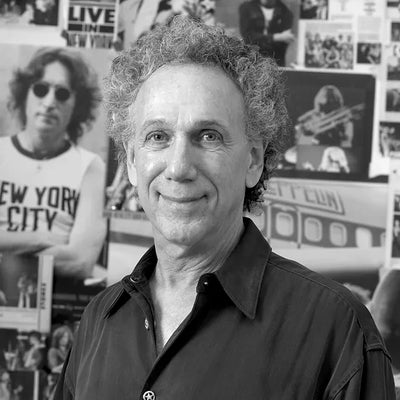
Bob Gruen
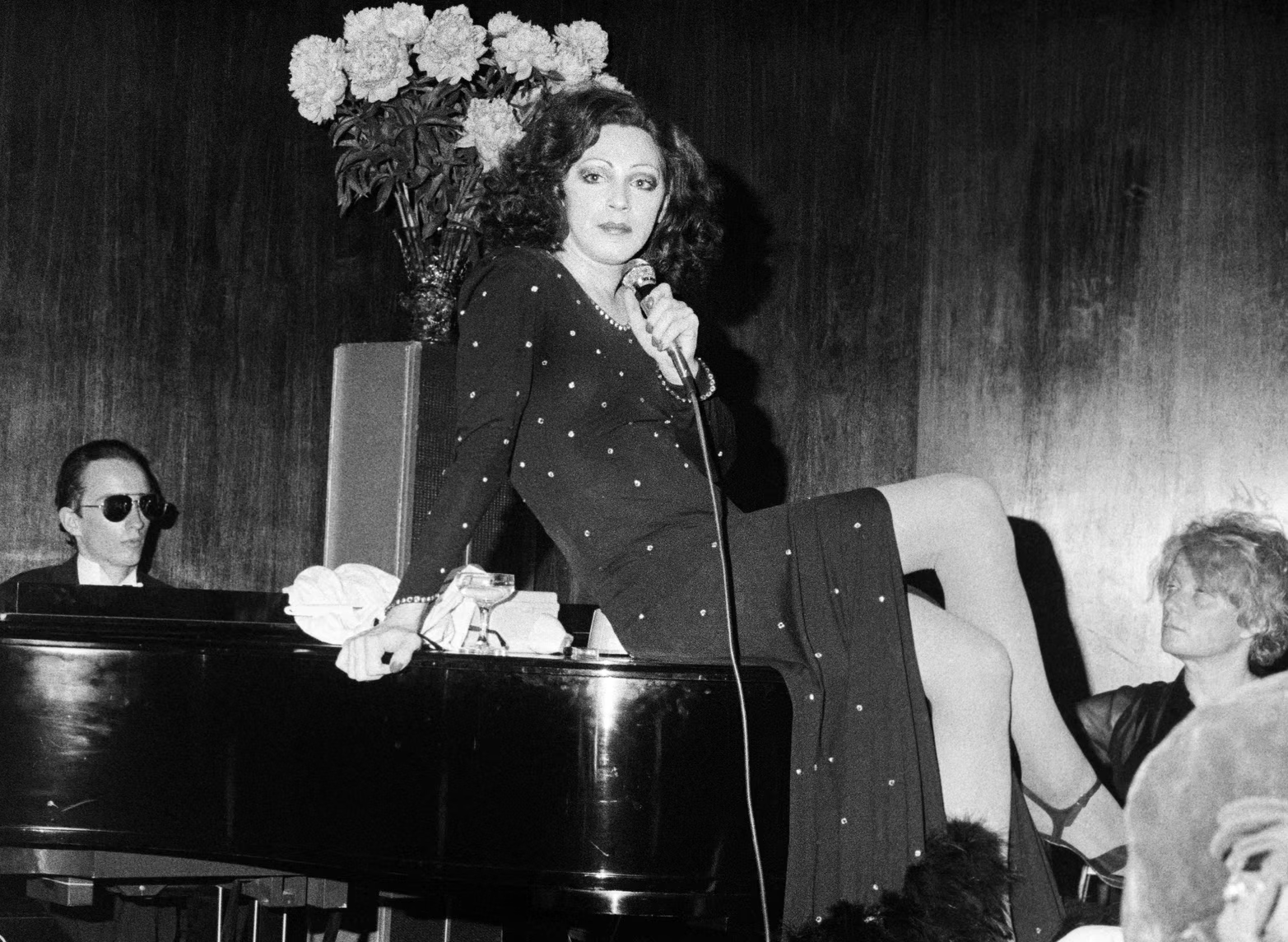
Holly Woodlawn during “Cabaret in the Sky” at C.I.T.Y
“Walk on the Wild Side” Portfolio
About the Presentation

Curatorial statement

WOMEN IN REVOLT

The present continually attempts to rewrite the past in its own image. Art has been the corrective lens where we of the future can experience the past without the filters of current mores with their interpretations, ideas or ideologies.Photography has long been the portal where we can enter other eras, giving us fresh eyes with which to view the past – an antidote to the erasure of human history. 1971 heralded the true ending of the 1960s, that tumultuous decade of social unrest, assassinations and rebellion. As the Romantic movement of the late 1700s in Germany was influenced and followed the ideals of the French Revolution of 1789, and focused on self-expression over political ideologies, so did an an- archic artistic movement that burst into flower in New York City after the revolutionary spirit of the 1960s, which also focused almost totally on self-expression. In the downtown art world of NY’s 1960's, there were two galvanizing scenes that sometimes crossed over; the cool, matte, alterna- tively b/w and pop film scene that organized around Andy Warhol's “Factory” and the anarchic, explosive, political, rock and roll, glitter, live theatre scene at the loft of John Vaccaro's "Play-House of The Ridiculous".In New York City, 1971 represented an open door to the future. Before we entered virtual reality and cyber space, every movement had its locus, the nest from which its ideas, fashions, pol- itics and culture sprang forth. In 1971 in New York City, that place was Max’s Kansas City, a small, dark restaurant with an exclusive backroom that glowed red with artist Dan Flavin’s laser sculpture. In that room, elements of style and culture fomented that would ferociously influence art and cul- ture for the next three decades, spreading first to Mercer Arts Center, then CBGB’s in 1974, Studio 54 in ’77 and then to not only America but all over the world. In the wake of Andy Warhol’s "Facto- ry" and John Vaccaro’s "Play-House of the Ridiculous", the borders between the art forms of art, poetry and music dissolved. Creative minds of the time saw all art as different forms of the same language.There with his eye and his camera was photographer Bob Gruen. With his innate gifts of empathy and non-judgement, he was not only an active participant, embedded in the scene, but was there consciously bearing witness to the changing of the guard.In "Vain Victory - Women in Revolt", Bob Gruen opens the door to a backstage look at this pivotal moment in art history. "Walk on the Wild Side" was suggested by Andy Warhol to Lou Reed as he looked for a theme for his film "Women in Revolt". Originally shot in 1970 but not re- leased until 1972, Warhol and partner Paul Morrisey had originally titled the film "PIGS: Politically Involved Girls". Warhol and Morrisey, innately conservative Catholics, wanted to ridicule the wom- en’s movement, particularly in the light of perceived feminist Valerie Solanas’s assassination at- tempt of Warhol in 1968.What they were not prepared for however was that the three stars of the film, Jackie Curtis, Candy Darling and Holly Woodlawn, all drag queens, were avowed feminists, who changed the tone of the comedy entirely bringing in a strange gravitas. "Walk on the Wild Side" was an exercise in mythmaking, forever linking playwright Jackie Curtis, actress Candy Darling and performer Holly Woodlawn into a gender-transgressing trio.At the center of this story is Jackie Curtis, poet, playwright, actor, singer, born in the slums of New York’s Lower East Side and raised in an all-female household presided over by his grand- mother, the legendary saloon keeper Slugger Ann, known as much for her rough charm as for her right hook. Curtis, charismatic with boyish charm, was the pied piper who led Candy Darling and Holly Woodlawn (among countless others, including Patti Smith and transgender rocker Jayne nee Wayne County) onto the underground stages of the East Village.

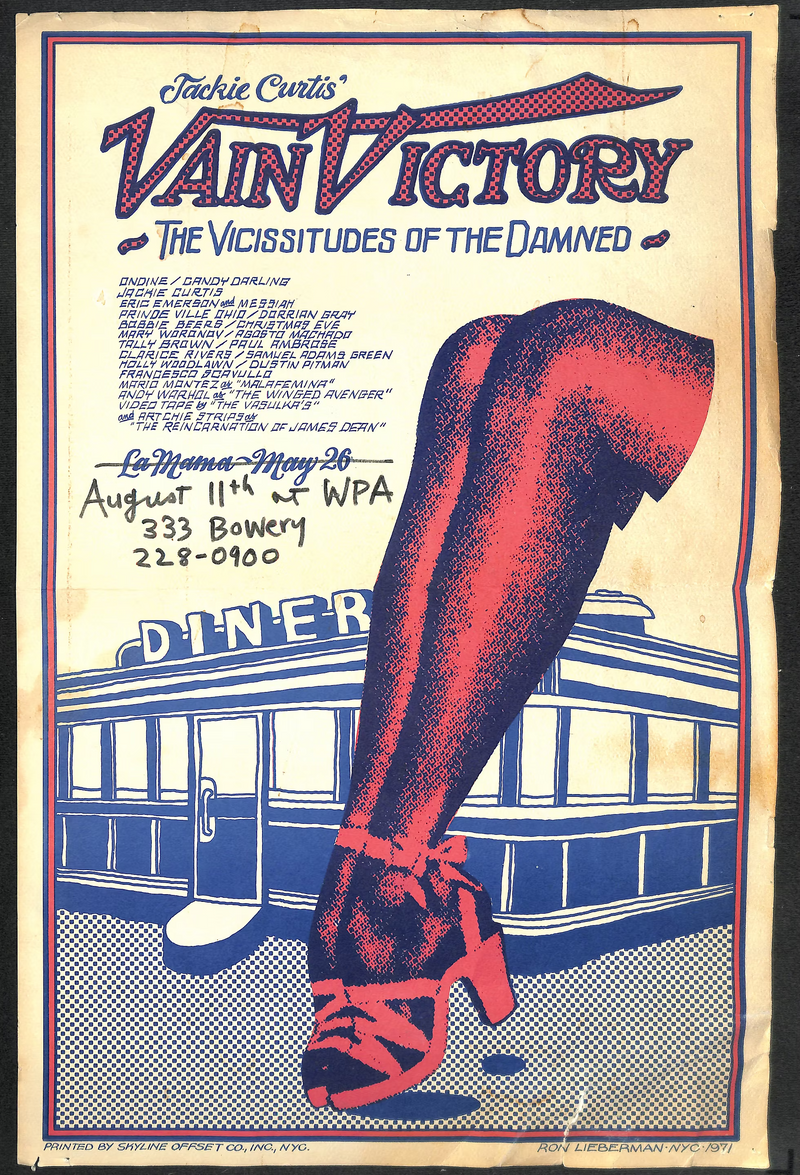
Tony Ingrassia had worked in the "Play-House of the Ridiculous" as an actor alongside both Curtis and Holly Woodlawn, but inspired by Vaccaro, he had directed Curtis’s 1970 play "Femme Fatale", which featured the stage debuts of both Patti Smith and Jayne County. On the strength of "Femme Fatale", Ingrassia was approached by Warhol to create a play from phone calls he taped in 1968 and 1969 called "Pork". "Pork" and "Vain Victory" would both premiere at LaMama in the spring of 1971. In the gulf left by Vaccaro and Ingrassia’s moving on with their own projects, Jackie Curtis had embarked on the creation called "Vain Victory". Emulating Vaccaro’s improvisational rehearsal method, which took place over months, Curtis designated a six-month rehearsal process supported by LaMama’s Ellen Stewart, a long-time supporter, at LaMama’s rehearsal studios on Great Jones Street, which shared space for a time with the "Pork" rehearsals.

Curtis had been deeply immersed in what came to be called genderfuck long before the 1969 Stonewall uprising brought visibility to the gay community. Curtis’s 1969 play "Heaven Grand in Amber Orbit", directed by Vaccaro and performed by the Playhouse, the seminal queer, glitter, glam, political, rock and roll theatre that is the secret history of New York’s so- called punk movement featured a banner headline in its "New York Times" review: "Not A Boy, Not A Girl. Just me Jackie". The "Times" article further quoted Curtis: "Not a boy, not a girl, not a faggot, not a drag queen, not a transsexual — just me, Jackie."

Today this period is portrayed as the beginning of New York’s transgender movement, but what is not well understood is that rather than promoting or supporting our current views of transgender, this was a movement that transgressed gender. Its influence would be seen in the work of the New York Dolls, Patti Smith, Jayne County, and drew in Lou Reed and Iggy Pop, among others.

During these months of "Vain Victory's" gestation, Bob Gruen attended the daily rehearsals at Great Jones Street. As depicted in "Walk on the Wild Side", Jackie Curtis abandoned the female drag that had made him a downtown icon and envisioned a new, bold, androgynous identity for himself, a glit- ter-encrusted “James Dean for a day” that announced the glitter glam movement to the world. "Pork" premiered on May 5, 1971, with "Vain Victory" following on May 26. "Pork" would soon move to London, premiering at The Roundhouse, where it would be seen by David and Angela Bowie, ushering in a New York underground glitter glam influence on Bowie. In February 1971, the "Play-House" decamped for Amsterdam, with Vaccaro criticizing the “police state” New York had become and vowing to create the future’s “theatre of light and energy”.

"Vain Victory" was a revolving door of performers including people like Andy Warhol who were advertisedas being part of the cast but never appeared on stage. The rehersals photographed by Bob Gruen included Jackie Curtis, Candy Darling, Ondine, Paul Ambrose, Agosto Machado, Prindaville West, Jay Johnson and Eric Emerson.

As for our cast of characters, by the mid 70's both Candy Darling and Eric Emerson had died. By the end of the 1980's Jackie Curtis and Ondine had died. By 2017 Holly Woodlawn and Paul Ambrose had died. Prindaville West's fate and whereabouts are unknown. Jay Johnson and Agosto Machado are both alive and well.

"Vain Victory" would go on to run for 66 performances at three venues in the summer of 1971. Andy Warhol, John Lennon and Yoko Ono attended opening night, with John declaring the musical “the best show I’ve ever seen.” Bob Gruen was there to capture it all. Now, ladies and gentlemen and non-bi- naries, it’s your turn.


Penny Arcade.

New York City, 2022

Installation Views
Paris Photo
Paris Photo
Paris Photo
Paris Photo
Paris Photo
Paris Photo
Paris Photo
Jackie Curtis during rehearsals for Vain Victory, New York City, 1971. Photograph by Bob Gruen.
Press

Coverage and reviews

Les Echos
Bob Dylan and the Photographers: In the Line of Fire

Bob Dylan's uneasy relationship with the camera produced some of the most iconic images in music history. This feature examines the photographers who documented his career and the extraordinary vintage prints presented by The Music Photo Gallery at Paris Photo.

Film & Conversation

From the fair

Vain Victory, Women in Revolt — Paris Photo 2022

Documentary · 2022
Enquiries

Interested in works from this fair?

For availability and pricing of presented works, private previews at the fair, institutional enquiries and exhibition opportunities, please contact the gallery directly.

Make an Enquiry → View all fairs